
Owning a home is often described as the great American dream, but that dream can quickly morph into a stressful ordeal when things break down, wear out, or simply need an upgrade. The homeowner’s dilemma is a universal one: at some point, you must entrust your most valuable financial asset, and the sanctuary where your family lives, to a complete stranger. The anxiety surrounding this necessity is entirely justified. Most of us lack the specialized knowledge required to diagnose complex mechanical issues, structural faults, or intricate system failures. This knowledge gap creates an inherent vulnerability. We worry about being overcharged for simple fixes, receiving subpar workmanship that causes secondary damage down the line, or dealing with unreliable individuals who leave projects half-finished and properties in disarray.
The true cost of poor hiring goes far beyond the initial invoice. A botched job can lead to severe structural damage, compromised safety, and significantly decreased property value. Furthermore, the emotional toll of dealing with a dishonest or incompetent professional—the sleepless nights, the endless phone calls, the stress of living in a perpetual construction zone—cannot be overstated. A bad hire drains your wallet and your peace of mind simultaneously.
The purpose of this guide is to empower you to take control of the hiring process. This is a comprehensive, step-by-step roadmap to evaluating, vetting, and finally hiring professionals who respect your property and your budget. By shifting your mindset and treating the hiring process like a strict business transaction rather than a casual favor, you protect yourself. Following a rigorous vetting protocol will allow you to build a lifelong network of trustworthy professionals, ensuring that when the inevitable breakdown occurs, your first call is one of confidence rather than panic.
Conduct a Thorough Home Assessment First
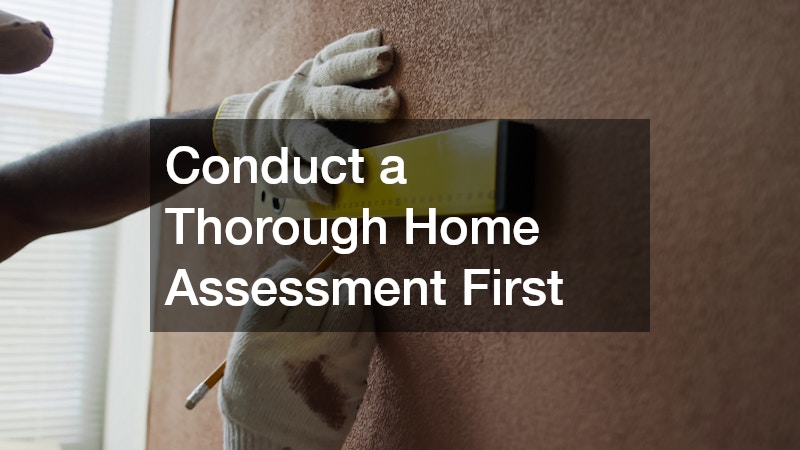
Before you even think about picking up the phone or typing a search query into your browser, you must take a step back and evaluate the situation independently. The foundational step to hiring a reliable professional is understanding exactly what you are hiring them to do. A vague explanation of your problem invites vague estimates and open-ended invoices.
Document the Exact Scope of the Problem Before Calling
Being able to articulate the issue clearly is your first line of defense against misdiagnosis and unnecessary upselling. When you call a company and simply state that something is “broken,” you are forcing them to guess the severity of the problem. Instead, you need to become an investigator in your own home. Take out your smartphone and record the issue in detail. Take clear, well-lit photographs from multiple angles. Record a video with the sound on if the problem involves strange noises, such as grinding gears or hissing pipes.
Write down exactly when the problem started, what time of day it is most noticeable, and what conditions seem to trigger it. This level of detail demonstrates to the person on the other end of the line that you are an informed, organized client. For example, if you notice water stains on your ceiling, taking clear photos of the stain, checking the attic for damp insulation, and noting if the leak only happens during heavy rain makes estimating the scope of a roof repair significantly more accurate before anyone even climbs a ladder. It narrows down the diagnostic window and saves billable hours.
Differentiate Between Cosmetic Fixes and Structural Needs
Homeowners must learn to perform preliminary visual inspections to separate minor aesthetic blemishes from major structural or mechanical failures. This distinction is critical because it dictates the type of professional you need and the budget you must allocate.
-
Look for root causes: A crack in the drywall might just be normal house settling, which requires a simple patch job. However, if that crack is accompanied by doors that suddenly won’t close or sloping floors, you are looking at a foundation issue that requires a structural engineer.
-
Identify water paths: Peeling paint in a bathroom might just require better ventilation and a fresh coat of high-gloss paint. But if the drywall feels soft to the touch, you have an active moisture issue behind the wall.
-
Assess urgency: Differentiating between a nuisance and a hazard helps you prioritize. A flickering light bulb might be a loose connection in the fixture, but a breaker that trips repeatedly is a fire hazard requiring immediate intervention.
Gather Serial Numbers and Maintenance Histories
A professional needs context to do their job efficiently. If your home has existing systems that are failing, having the paperwork ready dramatically speeds up the initial consultation and ensures they arrive with the right tools or replacement parts.
Create a dedicated folder for all your major household mechanisms. Inside this folder, you should have the make, model number, serial number, and date of installation for every major component of your house. Furthermore, maintain a log of past service visits. Knowing the exact specifications of your hardware is absolutely crucial for specialized, heavy-duty tasks; for instance, if you need to schedule a garage door repair, the technician will need to know the horsepower of the opener and the weight and material of the door to bring the correct tension springs. Without this information, you will be paying for an initial visit just to gather data that you could have easily provided over the phone.
Tap into the Right Networks for Recommendations

The internet has revolutionized how we find services, but it has also created an overwhelming flood of information that is often manipulated. Finding a reliable professional requires looking past the glossy advertisements and sponsored search results to find authentic, verifiable recommendations from people who have actual skin in the game.
Leverage Local Neighborhood Groups Over Broad Search Engines
While massive national search engines and aggregate review sites are useful for finding phone numbers, they are notoriously unreliable for assessing the true quality of a local tradesperson. Companies can easily manipulate their search rankings through aggressive digital marketing and paid placements, pushing smaller, more honest, and highly skilled independent workers down to the fifth page of search results.
Instead, turn to hyper-local platforms like Nextdoor, community-specific Facebook groups, or local homeowner association message boards. These platforms yield significantly more honest and nuanced reviews because the people posting are your actual neighbors. There is a built-in layer of accountability. When someone on your street finds a fantastic company for fair and honest electrical services, they are usually eager to share that gem with the community. Conversely, if a neighbor was scammed or treated poorly, they will post a detailed warning to protect their community. These localized insights are worth their weight in gold.
Ask Related Trade Professionals for Referrals
One of the most effective, yet underutilized, methods for finding high-quality professionals is to tap into the “contractor ecosystem.” Good professionals naturally gravitate toward and collaborate with other good professionals. They share the same standards of excellence, work ethics, and reliability.
If you have previously hired a painter who did an immaculate job, arrived on time, and respected your property, ask them who they would hire to fix a structural issue. A trusted general contractor, a meticulous carpenter, or a skilled tile setter usually has a deep roster of excellent recommendations for reputable, licensed plumbers and other specialized trades. These professionals see the work of their peers behind the walls and under the floors; they know who cuts corners and who does the job right even when the client isn’t looking.
Read Between the Lines on Online Review Platforms
If you must rely on broad online review platforms, you have to develop a critical eye. You cannot simply look at the star rating and make a decision.
-
Discard the extremes: Often, the most helpful reviews are the 3-star and 4-star ratings. Five-star reviews can sometimes be bought, incentivized, or written by friends and family. One-star reviews are occasionally the result of an unreasonable client or a vindictive competitor. The middle-ground reviews usually offer a balanced view of the company’s strengths and weaknesses.
-
Look for patterns: If one person complains about a messy worksite, it might be an anomaly. If fifteen people mention that the crew left trash everywhere, it is a systemic company issue.
-
Evaluate the company’s responses: How a business handles public criticism tells you everything you need to know about their customer service. If they respond to negative reviews defensively, with hostility, or by blaming the customer, run away. If they respond professionally, apologize for the miscommunication, and offer a concrete resolution, that demonstrates accountability and a commitment to their reputation.
Master the “Rule of Three” for Estimates

A fundamental rule of hiring for your home is to never settle for the first quote you receive, no matter how friendly the representative seems. You must embrace the “Rule of Three”—obtaining at least three distinct estimates from three different companies. This process is not just about finding the cheapest price; it is about establishing a baseline for the scope of work, understanding the market rate, and evaluating the professionalism of the companies bidding for your money.
Insist on Itemized Breakdowns Not Just Bottom-Line Numbers
A quote that consists of a single, lump-sum dollar amount at the bottom of a page is a massive red flag. It provides absolutely no transparency and leaves you entirely vulnerable to hidden fees, unexpected material costs, and disputed labor charges. You cannot compare three lump-sum quotes accurately because you have no idea what each company is actually proposing to do for that price.
Demand that every estimate be meticulously itemized. An acceptable quote must clearly separate the costs into specific categories:
-
Labor: How many workers will be on-site, what is their hourly rate, and how many hours are estimated?
-
Materials: What specific brands, models, and grades of materials are being used? There is a vast difference in price and quality between builder-grade materials and premium options.
-
Permit Fees: Who is responsible for pulling the permits, and what are the exact municipal costs?
-
Disposal and Cleanup: Is hauling away the old debris included in the price, or will that result in a surprise fee at the end of the project?
Question Bids That Are Drastically Lower Than the Average
When you gather your three estimates, you will typically find that two are within a similar price range, while one might be significantly lower or higher. Human nature pushes us toward the lowest number, but a bid that is drastically lower than the market average is almost always a trap.
The “lowball bid” is a common tactic used by unscrupulous companies to win the job. Once the project begins, they will inevitably “discover” unforeseen problems that require expensive change orders, effectively raising the price to match or exceed the other bids. Alternatively, a drastically lower price might indicate that the company is hiring unskilled, undocumented labor, using inferior, substandard materials that will fail prematurely, or operating without the necessary insurance policies. You are not saving money with a lowball bid; you are simply deferring the cost to a later date when you have to pay someone else to fix the mistakes.
Evaluate the Contractor’s Diagnostic Process
The estimate phase is your best opportunity to interview the professional and observe how they operate. Pay close attention to their diagnostic process during the walk-through. A reliable professional does not just glance at a problem and throw out a number. They act like a diagnostician.
Are they asking you detailed questions about the history of the issue? Are they taking actual measurements rather than just eyeballing the space? Are they inspecting the surrounding areas to ensure there isn’t collateral damage or an underlying root cause that needs to be addressed first?
Consider the complexities of HVAC systems as a prime example of why this matters. A thorough, honest technician will do a complete cost-benefit analysis of your system. They will take the time to explain whether implementing simple furnace repairs will safely extend the life of your current unit for another five years, or if the system is so compromised and inefficient that investing in a complete furnace replacement is the vastly smarter long-term financial move. They will educate you on the options, rather than just selling you the most expensive package.
Verify Credentials, Licenses, and Insurance

Trust is a wonderful concept in personal relationships, but it has no place in business transactions involving your property. “Trust, but verify” must be your mantra. Assuming that a company operates legally and safely simply because they have a nice logo on their truck is a dangerous and potentially financially ruinous mistake. You must demand hard proof of their credentials.
Request Proof of Liability and Worker’s Compensation Directly from the Insurer
Insurance is the shield that protects you from catastrophic liability. If an uninsured worker falls off a ladder on your property and breaks their leg, you, as the homeowner, could be held legally and financially responsible for their medical bills and lost wages. Your homeowner’s insurance might not cover it, leaving your personal assets exposed to lawsuits.
Every company you hire must carry two specific types of insurance: General Liability (which covers damage to your home) and Worker’s Compensation (which covers injuries to their employees). Do not simply accept a photocopied piece of paper handed to you by the representative; these are easily forged or can represent policies that lapsed months ago.
Instead, ask for the name and phone number of their insurance agent. Call the agency directly and request that a Certificate of Insurance be emailed or mailed directly to you, with you listed as the certificate holder. This proves the policy is currently active and valid.
Check for State and Local Licensing Compliance
Licensing requirements vary wildly from state to state and even from municipality to municipality. However, any trade that involves the core infrastructure of your home—electrical, plumbing, HVAC, roofing, and structural building—almost always requires a state-issued license. A license proves that the individual has passed required competency exams and understands the building codes designed to keep your family safe.
Do your own due diligence. Ask for their license number and go to your state’s contractor licensing board website. These databases are public and easy to search. Verify that the license is active, belongs to the person standing in your house, and is specific to the type of work they are bidding on. Furthermore, look for any history of disciplinary actions, suspended licenses, or unresolved consumer complaints. Strict licensing verification is entirely non-negotiable for hazardous or highly regulated systems; you absolutely do not want an amateur attempting complex tasks like major water heater repairs, where improper installation can lead to severe flooding, carbon monoxide leaks, or even explosive hazards.
Understand the Environmental Regulations for Your Project
Many homeowners are completely unaware that certain projects trigger strict environmental and health department regulations. Ignorance of these laws is not a defense, and allowing a contractor to violate them on your property can result in heavy fines levied against you, the homeowner.
For example, if your home was built before 1978, any renovation that disturbs paint requires a contractor certified in lead-safe work practices by the EPA. Similarly, handling refrigerants in air conditioning units requires specific EPA certifications to prevent ozone-depleting chemicals from entering the atmosphere. It is vital to remember that tasks dealing with biohazards and groundwater contamination, such as a major septic repair, require highly specialized professionals who are intimately familiar with, and fully compliant with, strict local and state health department regulations. Never assume a general handyman is qualified to handle environmentally sensitive systems.
Iron Out the Contract Details and Payment Schedules

A verbal agreement is worth the paper it is printed on. Before a single hammer is swung or a wrench is turned, every aspect of the project must be codified in a legally binding, clearly written contract. A solid contract protects both you and the professional, establishing clear expectations and mechanisms for resolving disputes.
Never Pay the Full Amount Upfront
The structure of your payment schedule is your primary point of leverage to ensure the work is completed to your satisfaction and on time. If you pay for the entire project upfront, you lose all your leverage; the company has your money, and prioritizing your project is no longer their primary concern.
Always establish a staggered payment schedule, often referred to as the “Rule of Thirds.”
-
The Deposit: You typically pay one-third of the total cost upfront. This allows the company to purchase the initial materials and secures your spot on their schedule. (Note: Some states have laws capping the maximum allowable deposit, so check your local regulations).
-
The Milestone Payment: The second third is paid when a specific, clearly defined milestone is reached—for example, when the rough framing is done, or when the new materials are physically delivered to the site.
-
The Final Payment: The final third is never handed over until the project is 100% complete, the site is fully cleaned, all local building inspections have been passed, and you have completed a final walk-through to ensure everything meets the agreed-upon standards.
Define the Project Timeline and Clean-up Responsibilities in Writing
Open-ended timelines are a major source of homeowner frustration. A project that was supposed to take two weeks drags on for two months because the crew only shows up for a few hours every third day. Your contract must include a strict, defined start date and a projected completion date.
Equally important are the daily site management details. The contract must stipulate the working hours, where the crew is allowed to park their vehicles, which bathrooms they are permitted to use (or if they must provide a porta-potty), and their daily clean-up responsibilities. You should not be tripping over tools and sweeping up hazardous debris every evening. Explain to the representative that this level of detail is vital even for smaller, routine jobs; having a clear service-level agreement protects your property and your peace of mind even when you are just hiring a company for an afternoon of routine generator repair maintenance. It establishes professionalism from the moment they pull into your driveway.
Secure Written Guarantees on Labor and Parts
Warranties can be confusing, and unscrupulous companies use this confusion to their advantage. You must clearly differentiate between the manufacturer’s warranty and the contractor’s warranty, and both must be provided to you in writing before the final payment is made.
The manufacturer’s warranty covers the physical parts and materials against factory defects. However, this warranty rarely covers the labor required to remove the defective part and install the new one. That is where the contractor’s warranty comes in. A reputable company will guarantee their craftsmanship and labor for a specified period, typically one to two years. Emphasize to the company that when you are paying a premium rate for a high-end home appliance repair service, you must ensure their labor is explicitly guaranteed in writing, so you are not charged another exorbitant service fee if the machine breaks down again the very next week due to a faulty installation.
Conclusion
Navigating the world of home improvement and maintenance does not have to be a gamble. By shedding the mindset of a passive consumer and adopting the rigorous, analytical approach of a project manager, you can protect your property, your budget, and your sanity. The core concepts of this guide all revolve around intentionality: executing thorough self-education about your own home, demanding multiple detailed and itemized quotes, ruthlessly verifying insurance and state licenses, and refusing to hand over a single dollar without a rock-solid, highly specific written contract in place.
While taking these extensive steps undoubtedly requires significant heavy lifting, time, and research upfront, the long-term payoff is immeasurable. The goal is not just to fix a single immediate problem; the ultimate reward is developing a personalized “black book” of highly dependable, thoroughly vetted tradespeople. Once you find these golden professionals, you will rely on them for decades, confident in the knowledge that your home is in the hands of experts.
Do not wait until water is pouring through your ceiling or your heating system fails in the dead of winter to start this process. Desperation leads to hasty decisions and poor hiring choices. Take action today. Start compiling your home’s maintenance history, look up your local state licensing boards, and begin asking your trusted neighbors for recommendations. Building your network of professionals right now is the single best investment you can make in the future of your home.
